Introduction: Astronomy and the Universe Beyond
Astronomy is the study of celestial bodies, space, and everything beyond planet Terrus. It concerns itself not only with stars, moons, and planets, but also with the invisible forces that bind them together. It is a science that explores gravity, light, the vacuum of space, and the vast galaxy that lies beyond the Ausarian Expanse. Taking advantage of gnomish inventions and clever use of magic, it studies other planets and aims to make them habitable.
The Ausarian Expanse
The Ausarian Expanse is a solar system in which Terrus is the fifth planet from Ausaria, the sun. It has one moon called Selene, and it otherwise resembles Earth as we know it.
Igneus
The first planet from Ausaria. It is completely uninhabitable. It is tidally locked, meaning that one side is always facing the sun while the other remains in darkness. The dark side consists of mountains of black rock, while the other side harbors oceans of magma with ever changing continents that clash against each other, forming and crumbling mountains and valleys. Moreover, the atmosphere of Igneus is toxic, consisting of a high percentage of sulfur, which results in a hazy yellow sky.
Rosea
The second planet from Ausaria. It’s a pink gas giant with four moons orbiting it.
Nodus
The third planet from Ausaria. It’s a comparatively tiny bundle of asteroids that crushed together to form a dwarf planet.
Albaxia
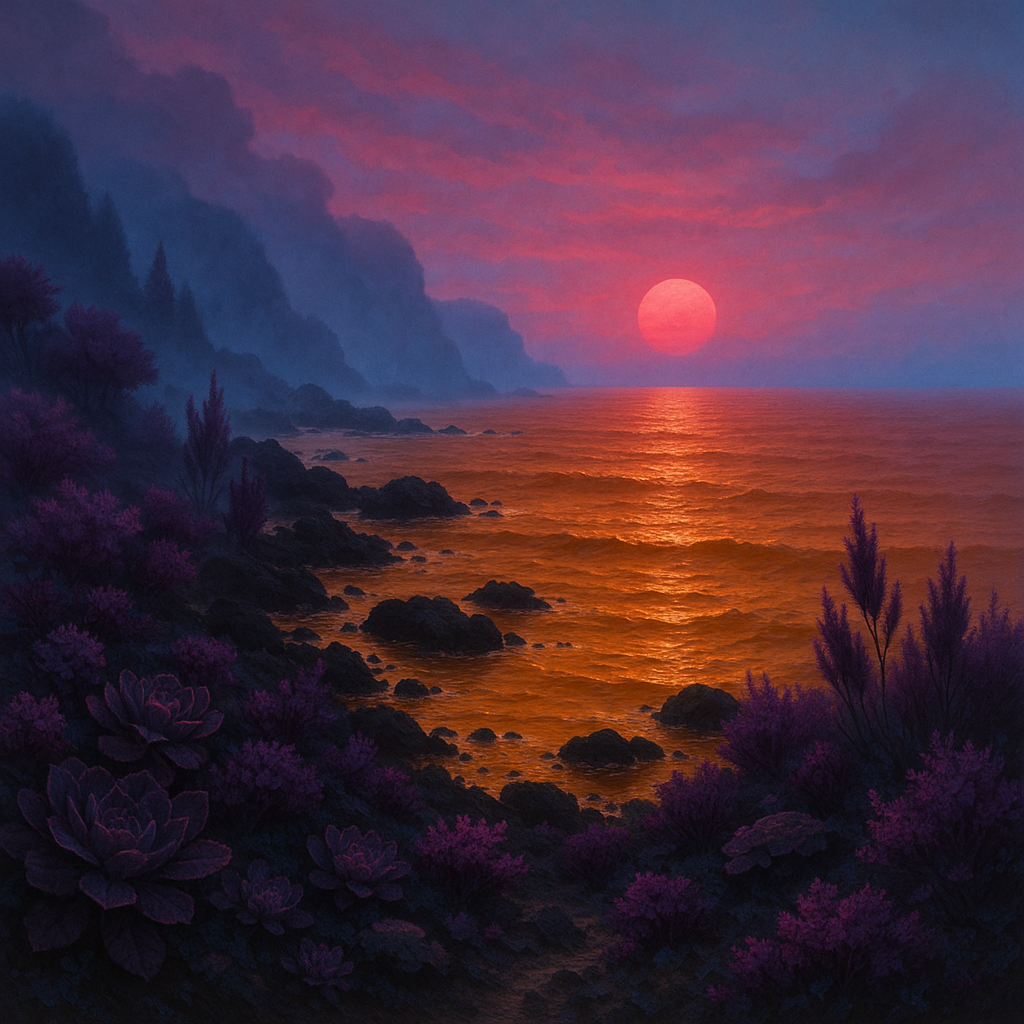
The fourth planet from Ausaria. It seems blue from space, and is considered a habitable planet. From its surface, the sunlight has a pink, reddish hue to it, as a result of the thick and hazy atmosphere’s blue tint which filters out much of the shorter-wavelength light. Shadows have a warm, amber tone, and the plants and foliage are mostly purple and black in color. Albaxia completes an orbit around Ausaria every 104.5 Albaxian days (or approximately 640 Terrestrial days).
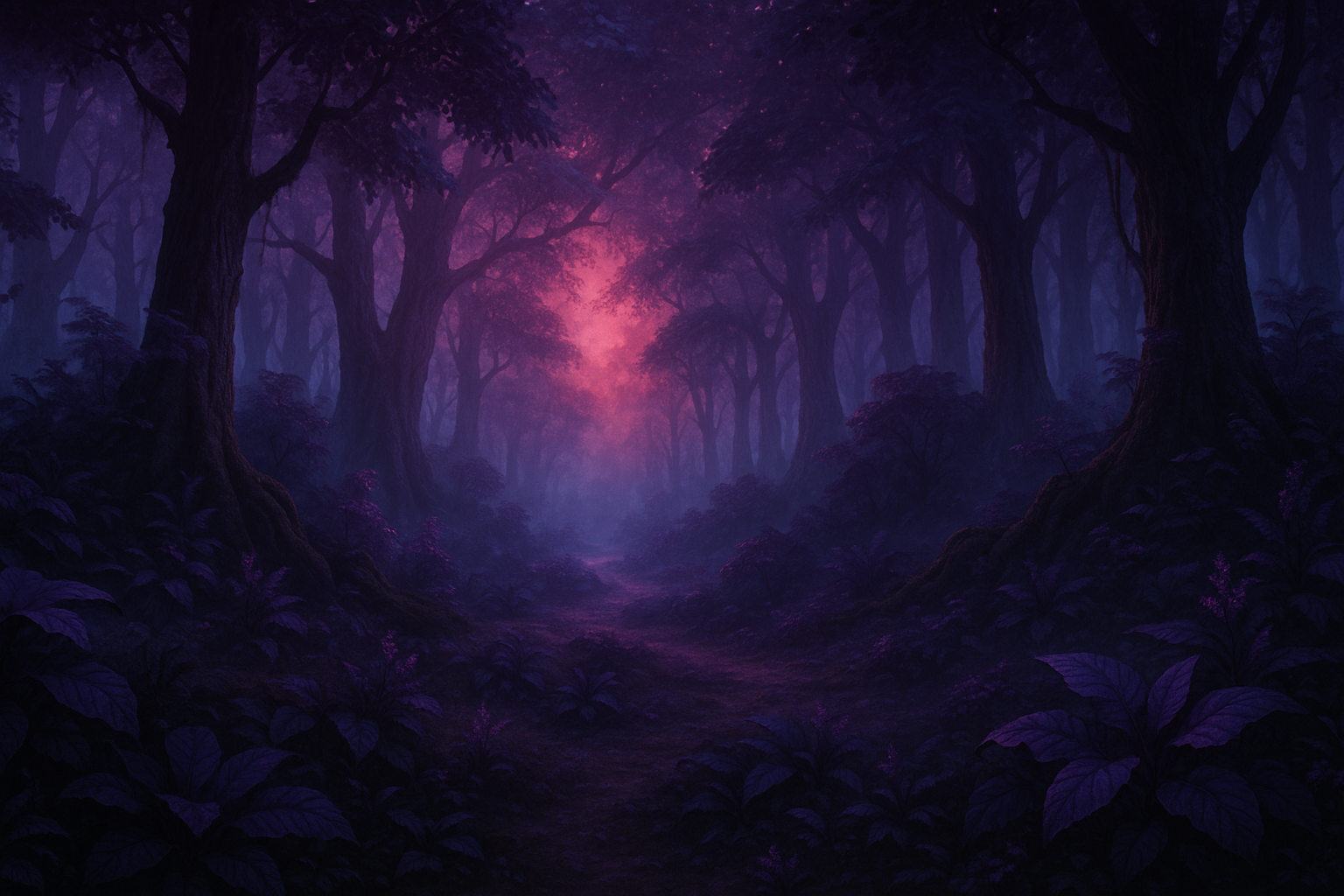
Atmosphere. The atmosphere on Albaxia consists of Neon (~59%), Oxygen (~14%), and Krypton (~26%), as well as vapors and dust. The atmospheric pressure is higher than on Terrus, so even though the percentage of Oxygen is lower, the air is still breathable for terrestrial creatures. Krypton is a potent anesthetic. Upon arriving on Albaxia, terrestrial creatures would feel a wave of euphoria and giddiness, finding things much funnier than they actually are. This lasts for the first 48-96 hours on Albaxia. Mental abilities slow down as well, and dexterity is hindered, causing a lack of coordination similar to alcohol intoxication. After at least a month of exposure to the Albaxian atmosphere, terrestrial creatures grow complacent. Their short-term memory is impaired, and some become paranoid.
Sound. Because of the high concentration of Krypton in the air, creatures’ voices would sound significantly deeper than they are on Terrus. Whispers, footsteps, and the rustle of leaves can be heard from greater distances, while high pitched noises are muffled. Sound travels more slowly on Albaxia, meaning there would be a slight delay over distances greater than 60 feet.
Nectar Seas. The primary liquid on Albaxia is a Deep Eutectic Solvent composed of Choline Chloride and Urea, commonly referred to as Nectar. It’s an amber colored, viscous substance resembling maple syrup. It’s slightly tacky and smells a faintly sweet, but drinking it would cause a terrestrial creature amonia poisoning. By boiling this liquid the water inside it would evaporate, leaving the toxic sludge behind. The captured steam would condense into fresh, drinkable water.
Marine Creatures. There are no “fish” in the Nectar seas of Albaxia, but there are marine creatures. Their skin is leathery and thick to protect them from the liquid, and they generally move using undulation (like eels). They have no gills, they instead surface to breath the oxygen-rich air (like whales and dolphins).
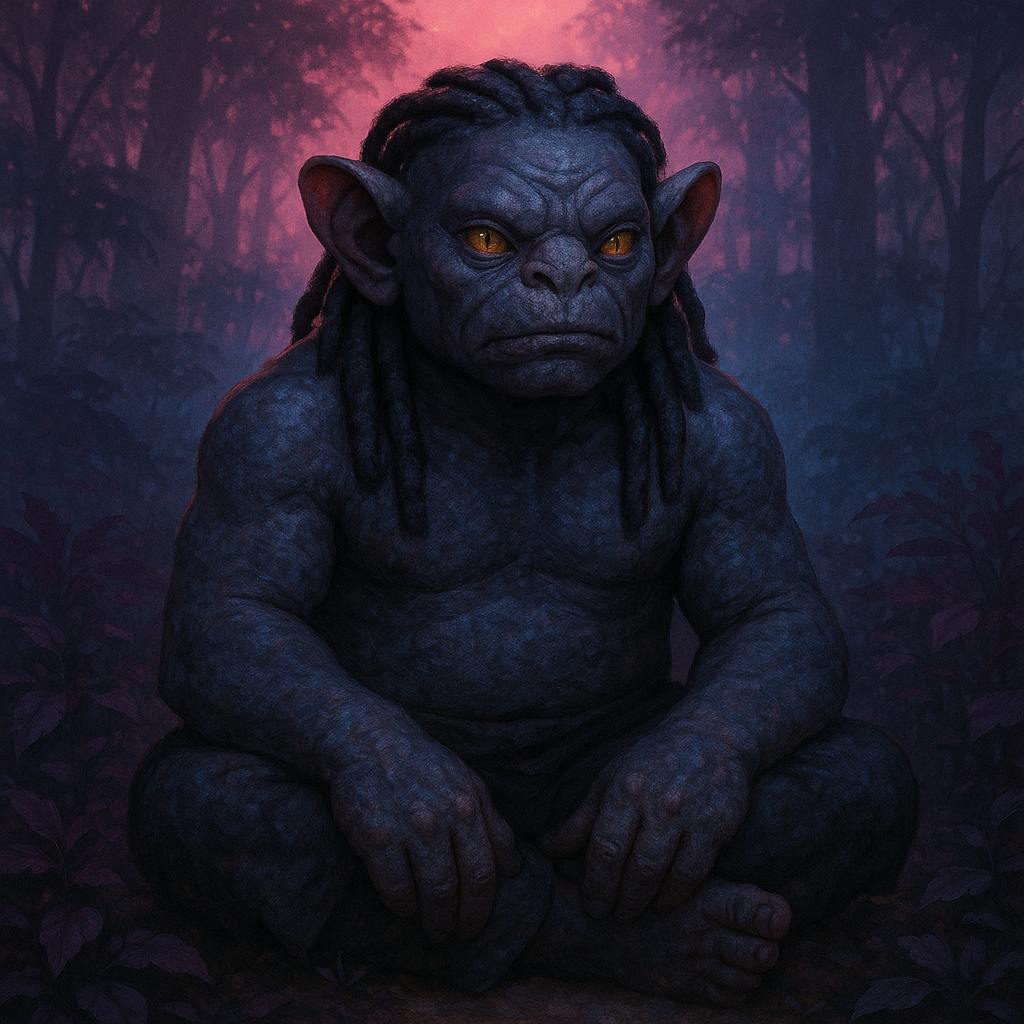
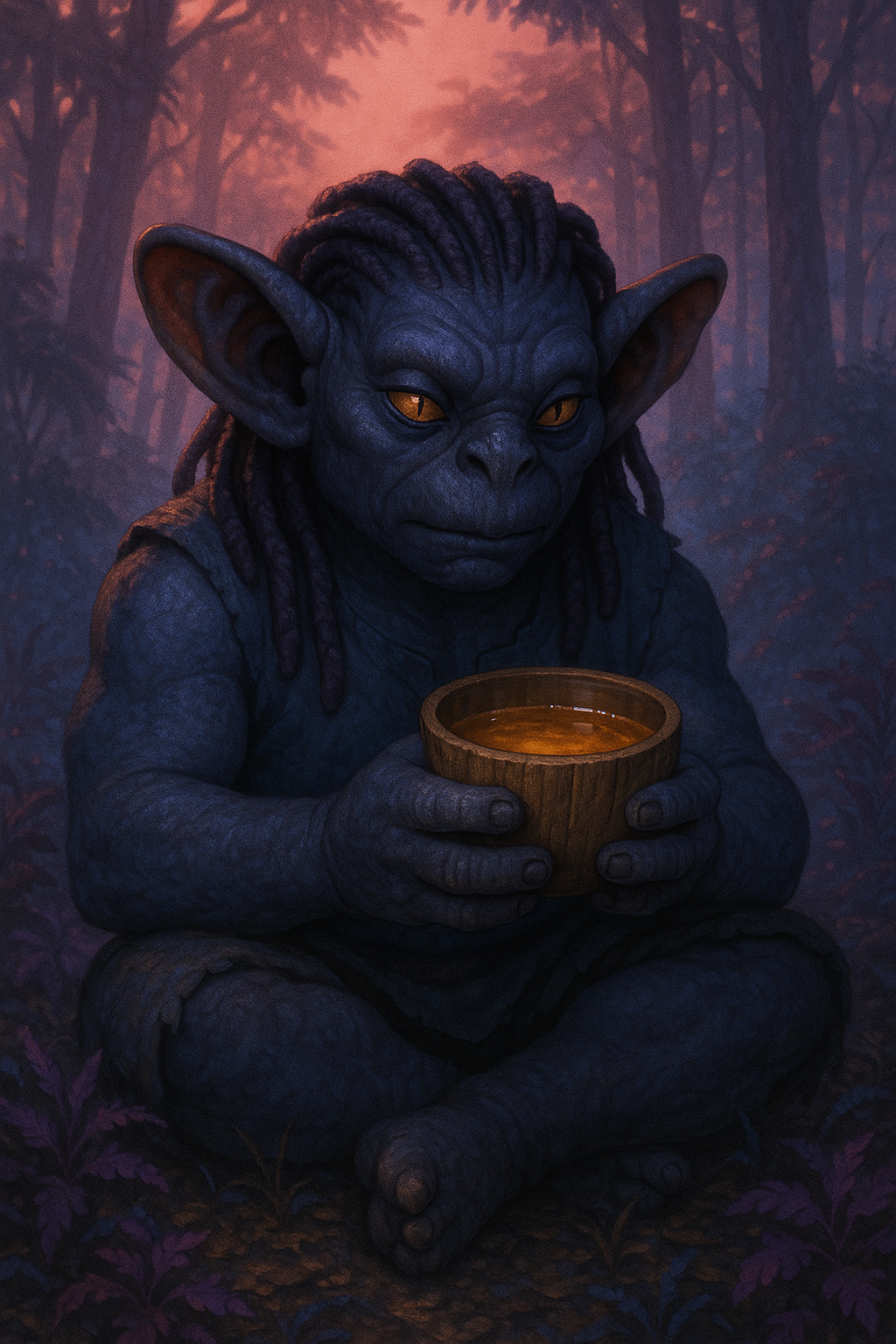
Mauvians. Mauvians are humanoids that have a short, broad build. Their skin is leathery, almost hide-like, and its color ranges from deep indigo to slate grey, matching the flora and fauna on Albaxia. Their hair grows in dark violet or jet black dreadlocks, and their eyes have slit-shaped, feline pupils and amber colored irises. Their ears are large and cupped forward, capable of capturing vibrations in the ground, and they have no visible nose bridge, just wide slit nostrils.
Moons. Albaxia has two moons, called Orbis Major and Orbis Minor. Orbis Major is the bigger one, but it’s further from Albaxia than Orbis Minor, which is considerably smaller. It’s quite easy to discern between them by their size and speed. Orbis Major conpletes a full orbit every seven Albaxian days (almost 43 Terrestrial days), while Orbis Minor completes one orbit every 2.3 Albaxian days (approximately one fortnight on Terrus).
The Albaxian Day
One day on Albaxia is approximately 147 hours, or just over 6 days on Terrus. This results in very hot afternoons and very cold nights, as the sun shines or is absent for over 70 hours at a time. The day is divided to twelve 12.25-hour periods by terrestrial creatures, who are used to 24-hour days. Mauvians, on the other hand, divide one full rotation into two distinct 73.5-hour days, their sleep cycle revolving around the temperature rather than daylight.
Morning. The morning is equivalent to a normal day on Terrus in temperature and weather. The first hours of light are still cool and comfortable from the early morning, and it starts getting hot after about six hours.
Noon. The noon is hot, and it’s usually a good time to find cover and rest. It is not recommended to sleep in the sun, even though the thick atmosphere provides some protection from ultraviolet radiation.
Midday. The midday is the hottest period of the day, especially towards the end. It is recommended to stay hydrated and remain under cover as much as possible. During this time, mauvians usually sleep.
Afternoon. During the late afternoon hours the heat starts to subside. It’s a good time to find cover and rest.
Twilight. During twilight, the sky has beautiful shades of pink and orange, and cooler breeze starts to blow. It is similar to the morning in terms of temperature and weather.
Evening. The evening is when it starts getting colder, and towards the end the sun begins to set, resulting in a marvelous near 20-minute sunset. It’s a good time to take a rest.
Mornight. The mornight is the first dark morning. It’s still warm outside due to the thick atmosphere that traps the heat and prevents the planet from freezing.
Night. The first night is cold, but not freezing. It’s a good time to take a rest.
Midnight. The midnight is the second dark morning. It’s the coldest period of the Albaxian day, reaching a temperature of around 7-10°C in summer and 0-6°C in winter. During this time, mauvians usually sleep.
Afternight. The afternight, or second night, is initially very cold, but it gets warmer towards the end. It’s a good time to take a rest.
Dawn. The dawn is when you can see first hints of light. It’s beginning to be cool and comfortable outside. By the end of it, the sun rises in a marvelous near 20-minute sunrise.
Early Morning. The early morning is still cool and comfortable from the night before, and is a great time to take a rest.
Some prefer to wake up in the early morning, taking rests at the same ~12.5 hour intervals. This is in order to sleep during the midnight and midday periods, avoiding extreme temperature.
Terrus
The fifth planet from Ausaria. It consists of vast continents, large bodies of water, plants, and an atmosphere composition that’s perfect for terrestrial life. It is home for countless civilizations that live in forests, jungles, deserts, and other biomes, and most adventures take place there. Terrus completes an orbit around Ausaria approximately every 950 days. One day on Terrus is approximately 24 hours.
Moons. Terrus has one moon, called Selene. It conpletes a full orbit approximately every 19.75 days.
The Terrestrial Calendar. Since a “year” on Terrus takes 950 days, people don’t tend to measure years by the time it takes Terrus to orbit the sun. Instead, they measure the passage of time by the time it takes Selene to orbit Terrus. They divide the year to 3 19-day and nine 20-day months, resulting in a 237-day year. The summer year is 2 days longer, having only one 19-day month.
Seasons. The seasons on Terrus are long, each taking approximately a year. Summers yield plentiful harvest, resulting in 3 full rotations of crops, which are necessary to hoard for the long winters.
Ghelus
The sixth planet from Ausaria. It is composed of brown rock, orange soil, and is completely frozen (~-112°C). It has lakes, rivers, and seas of liquid Ethane. Ghelus completes an orbit around Ausaria every 2,095 terrestrial days.
Atmosphere. Ghelus’s atmosphere is composed of Argon (~82%), Carbon Tetrafluoride (~15%), Carbon Monoxide (~2%), and Ethane vapor (<1%). This air isn’t breathable for terrestrial creatures by any means.
Moons. Ghelus has no moons.
Visiting Ghelus. Seriously not recommended.
Chapter 1: History of Astronomy
Astronomy has been around since man first gazed at the starry night sky. It began as a way to count the days on a calendar, and slowly evolved from being a religious endeavor into a science.
Astronomy as a Religious Endeavor. At first, it was believed that the stars in the night sky are celestial angels, deities, and beasts, and their movements were closely watched and interpreted for omens and predictions. Later, after it was established that the earth has curvature and isn’t flat, the telescope was invented. This had allowed astronomers to learn that there are other planets with their own moons.
Observation of Moons and Other Planets
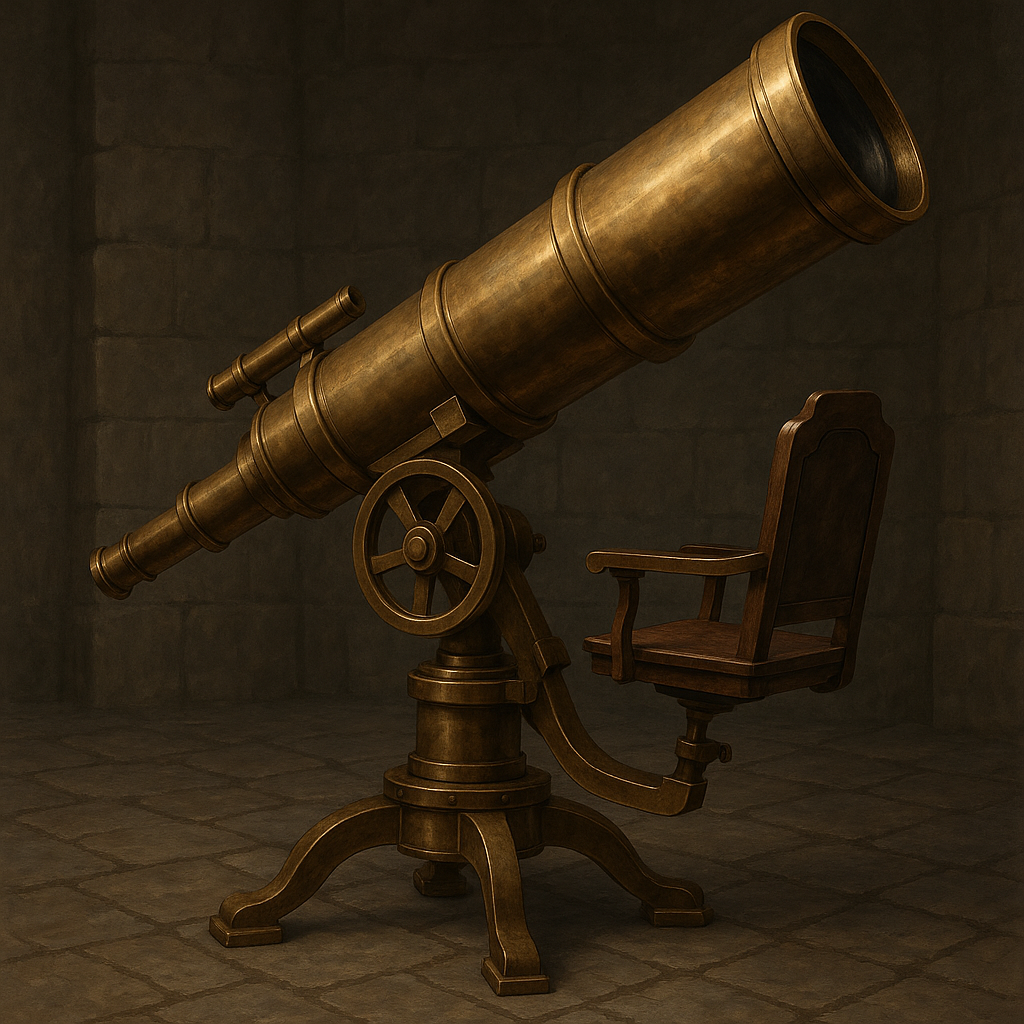
Moons and other planets have been observed using a revolutionary invention called the teleseer, a large enchanted telescope which allows the operator to cast Scrying 5th Level (Divination)
You can see and hear a particular creature you choose that is on the same plane of existence as you. on the location it is focused on. This has allowed astronomers to see the surface of Selene and of the other planets in the Ausarian Expanse.
Going to the Moon
The elven wizard who created the first teleseer is called Saelethil Miatris. He had a telescope specially made by his gnomish friend Guila Horsentuth, and then he enchanted it himself. He used it to scry on the surface of Selene and found no life forms there. After many months of research, he decided to teleport to the Selene using the Teleport 7th Level (Conjuration)
This spell instantly transports you and up to eight willing creatures of your choice that you can see within range, or a single object that you can see within range, to a destination you select. spell. To his horror, he quickly realized that there was no air on the moon, and no sound as well. Teleport 7th Level (Conjuration)
This spell instantly transports you and up to eight willing creatures of your choice that you can see within range, or a single object that you can see within range, to a destination you select. has a verbal component, so he couldn’t cast it normally to return home. Thankfully, he had dabbled in metamagic before and knew the Subtle Spell metamagic. Using what little time he had, he teleported back.
Saelethil got to work on a spell that would allow him to breathe on the surface of Selene. He managed to create a personal barrier that blocked the air around the target from dispersing. However, the frist renditions weren’t usable, because the air within the barrier became unbreathable after a few minutes, forcing him to dismiss the barrier. At first he believed that something was wrong with the barrier itself, but he soon realized that it was the breathing that caused this. In one of his experiments, he put a mouse in a jar and watched it suffocate. This was nothing new, but it had then occurred to him that breathing naturally transmutes the air. Using transmutation magic, Saelethil managed to fix this issue, designing a spell that would also un-breathe the air inside the barrier. The final version of the spell was called Air Barrier 1st Level (Transmutation)
You touch a willing creature and a protective magical force surrounds it and traps the air around it until the spell ends. , and is still widely used to this day in exploration of moons and alien planets.
After months of designing this spell and finally achieving a result he was happy with, Saelethil had decided to attempt to teleport to the moon once more. He did so successfully, and the Air Barrier 1st Level (Transmutation)
You touch a willing creature and a protective magical force surrounds it and traps the air around it until the spell ends. spell worked. He noticed that the gravity was lighter there, and he noticed the magnificent view of Terrus from above.
While on the moon, he decided to test something out: he casted the ritual spell Tiny Hut 3rd Level (Evocation)
A 10-foot-radius immobile dome of force springs into existence around and above you and remains stationary for the duration. and dismissed his air barrier from inside it. He could breathe. He teleported back home and started researching the nature of this spell. He found the component which is responsible for the breathable atmosphere and started designing a more permanent one, utilizing his air refreshment formula from Air Barrier 1st Level (Transmutation)
You touch a willing creature and a protective magical force surrounds it and traps the air around it until the spell ends. . After months of work, he ended up with the Miniature Atmosphere 7th Level (Transmutation)
An immobile sphere of force springs into existence around you and remains stationary for the duration. spell.
When the spell was complete, Saelethil then hired construction workers to build a house on Selene. He would cast Air Barrier 1st Level (Transmutation)
You touch a willing creature and a protective magical force surrounds it and traps the air around it until the spell ends. on all of them, including himself, teleport the materials to the moon, and then teleport the group. Then he’d cast Miniature Atmosphere 7th Level (Transmutation)
An immobile sphere of force springs into existence around you and remains stationary for the duration. on a spot he liked and the crew started their work. At the end of their work day he would teleport everyone back to his study by casting Teleportation Circle 5th Level (Conjuration)
As you cast the spell, you draw a 10-foot-diameter circle on the ground inscribed with sigils that link your location to a permanent teleportation circle of your choice whose sigil sequence you know and that is on the same plane of existence as you. on the same spot. After doing this every day for a year, he had a house with a breathable atmosphere on the moon, along with a permanent teleportation circle.
Colonizing the Moon
Saelethil had passed down his knowledge and research, and he had many students. Over the years, a large section of the light side of Selene was colonized in a collective effort of astronomers. There are now large areas of overlapping miniature atmospheres with houses, shrines, and shops. There are multiple colonies on Selene, and there’s a permanent teleportation circle for each one.
Chapter ?: Races
The following are races of creatures that live on other planets.
Mauvian
Hum, hum, low and calm,
Slowly, feel the beating drum;
Listen, each and every pound,
Hear the rumbling, heavy sound,
Feel it coursing through your blood,
See the ripples in the mud;
The sun is rising, time has come.
Feel the beating of the drum!
Squat and Strong
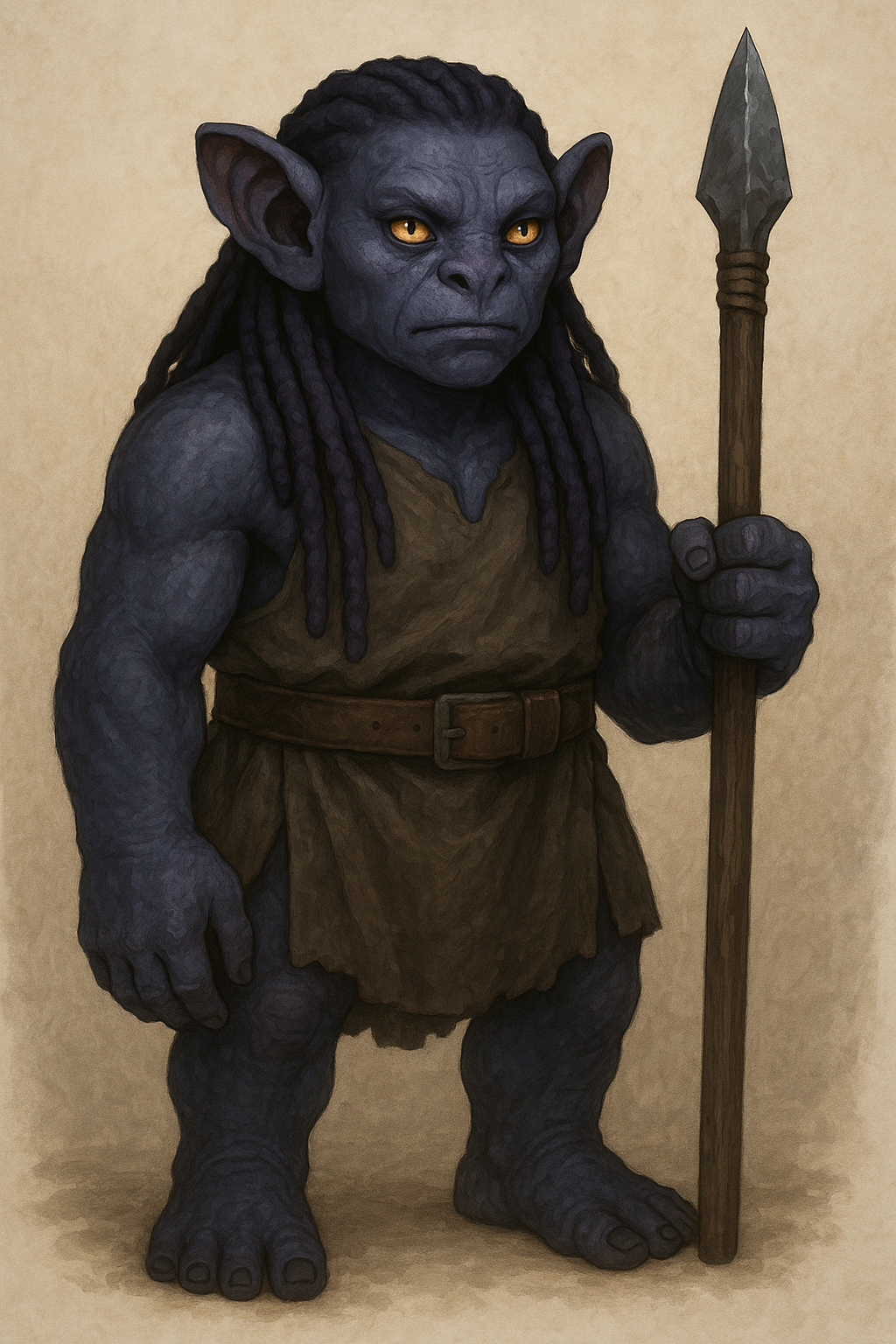
Mauvians have a short, broad build. Their skin is leathery, almost hide-like, and its color ranges from deep indigo to slate grey, matching the flora and fauna on Albaxia. Their hair grows in dark violet or jet black dreadlocks, and their eyes have slit-shaped, feline pupils and amber colored irises. Their ears are large and cupped forward, capable of capturing vibrations in the ground, and they have no visible nose bridge, just wide slit nostrils.
Albaxian Natives
Mauvians are the dominant species on Albaxia. They can drink the Nectar found on Albaxia because their digestive system has evolved to distill the water from it, excreting the toxic sludge afterwards. They are used to breathing Krypton, and thus their movements have a calm, flowing slowness to them. Their eyes struggle to see shades of blue, but have adapted to distinguish between different shades of orange, purple, red and infrared.
They have a distinct sleep cycle revolving around the extreme temperatures of the Albaxian day cycle. They sleep during the hottest 10-12 hours of the day and the coldest 10-12 hours of the night, staying awake for around 60 hours at a time.
Terrestrial Distress
If a mauvian found themselves inside a terrestrial atmosphere which lacks Krypton, they would experience restlessness. They would feel jittery, impatient, and a little anxious. Albaxia has a dense atmosphere, and the thin terrestrial air would not offer the resistance they are used to. This would result in clumsiness and motor overshooting. High pitched sounds will be slightly painful to their ears as they are used to low, deep hums. Drinking pure water is safe but unsatisfying for them, as they are used to the sweet viscous Nectar of Albaxia.
Mauvian Traits
Your mauvian character has the following traits.
Ability Score Increase
Your Constitution score increases by 2 and your Wisdom score increases by 1.
Size
Mauvians stand between 3 and 5 feet tall. Your size is Medium or Small.
Speed
Your base walking speed is 30 feet.
Darkvision
Accustomed to life on Albaxia, you have superior vision in dark and dim conditions. You can see in dim light within 60 of you as if it were bright light, and in darkness as if it were dim light. You can’t discern color in darkness, only shades of gray.
Thick Hide
As a reaction when you are hit with an attack you can see that deals nonmagical bludgeoning, piercing, or slashing damage, you can add your constitution modifier to your AC, possibly causing the attack to miss you. You gain this bonus to your AC against this kind of attacks until the start of your next turn.
You can use this bonus action a number of times equal to your proficiency bonus, and you regain all expended uses when you finish a long rest.
Tremorsense
As a bonus action, you gain Tremorsense with a range of 30 feet for 1 minute.
You can use this bonus action a number of times equal to your proficiency bonus, and you regain all expended uses when you finish a long rest.
Extended Wakefulness
Mauvians only need to sleep every 60 hours or so. Provided you sleep at the end of every third terrestrial day, you can benefit from a long rest even if you don’t sleep, as long as you take at least 8 hours of downtime performing only light activity like reading, talking, eating, or standing watch.
Languages
You can speak, read, and write Mauvish.
Variant Mauvian
If your campaign uses the 2024 ruleset, your Dungeon Master might allow this variant trait which replaces the Ability Score Increase trait.
Mauvian Resilience
You have resistance to poison damage. You also have advantage on saving throws you make to avoid or end the poisoned condition.
Chapter ?: Spells
The following are spells that are essential to extraterrestrial travel.
1st level
The following are 1st Level spells.
Air Barrier
| Level | School | Range / Area | Components |
|---|---|---|---|
| 1st Level | Transmutation | Touch | V, S |
| Duration | Casting Time | Attack / Save | Damage |
| 8 Hours | 1 Action | None | None |
You touch a willing creature and a protective magical force surrounds it and traps the air around it until the spell ends. The target can breathe normally regardless of its surroundings, as the air trapped inside is being refreshed. The barrier only blocks nonmagical gasses, all other physical objects, creatures, and effects can pass through it freely. The spell ends early if you or the target dismiss it as an action.
At higher levels. When you cast this spell using a spell slot of 2nd level or higher, you can target one additional creature for each slot level above 1st.
7th level
The following are 7th Level spells.
Miniature Atmosphere
| Level | School | Range / Area | Components |
|---|---|---|---|
| 7th Level | Transmutation | Self / 50 ft | V, S, M * |
| Duration | Casting Time | Attack / Save | Damage |
| 24 Hours | 10 Minutes | None | None |
An immobile sphere of force springs into existence around you and remains stationary for the duration. The area is a sphere that can be as small as 5 feet in radius to as large as 50 feet in radius.
The atmosphere inside the space is composed of breathable air of a composition you decide, and the composition must be one you know. Creatures, objects, and other effects can pass freely through the edges of the sphere, except for nonmagical gasses.
Different planets have different atmospheres. Each atmosphere is composed of a different combination of gasses. When you first gain the ability to cast this spell, you learn the atmosphere composition of the planet you are on. You can commit a new atmosphere composition to memory by studying it, either from written notes or by using magical instruments to analyze it.
You can create a permanent miniature atmosphere by casting this spell in the same spot with the same air composition every day for a year. The air inside is being magically refreshed and stays breathable indefinitely.
* - (a small glass bottle containing mist from a cloud.)
Chapter ?: Items
The following are items that are essential to extraterrestrial travel.
Analystor
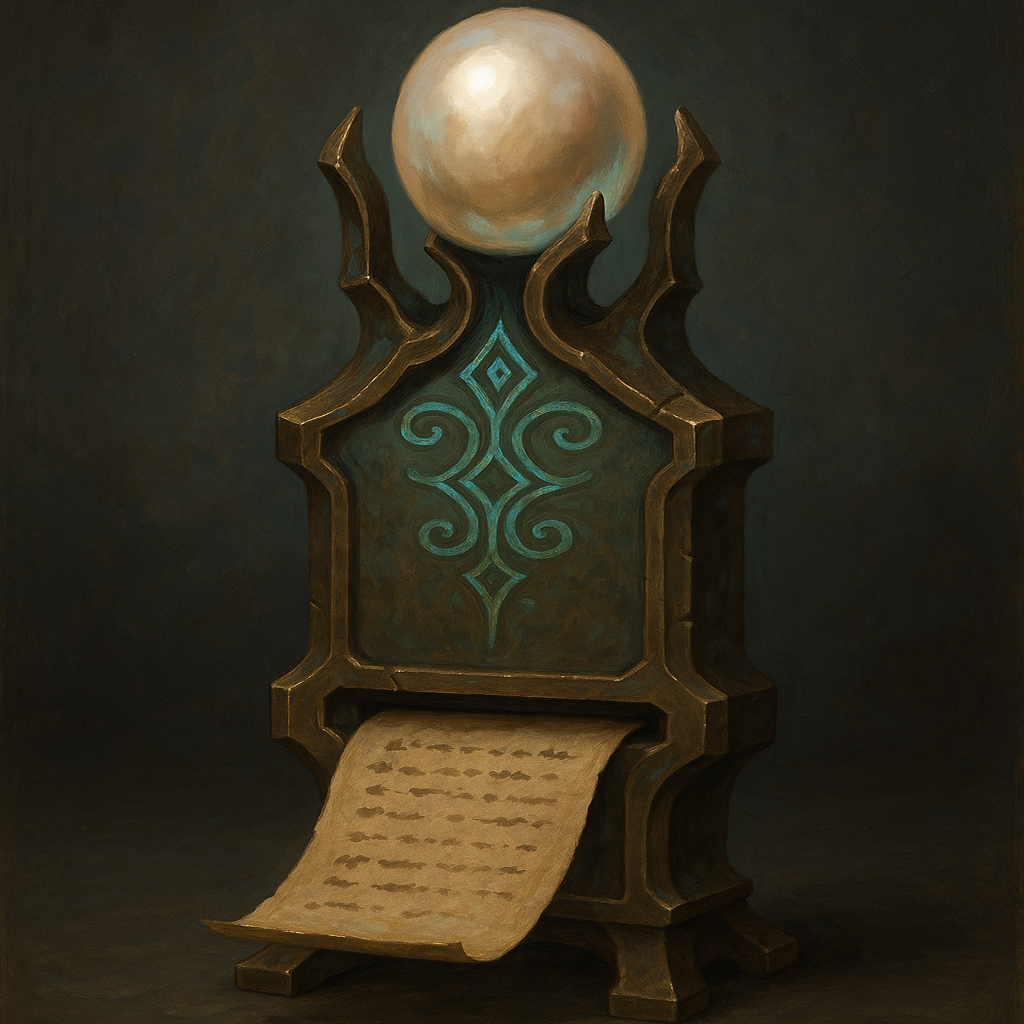
This enchanted device is capable of analyzing objects and atmospheres using magic. In order to get an output from this device, you need to insert a small piece of parchment into the slot at the bottom. It has two modes.
Aeris. The device analyzes the composition of air around it in a 10-foot radius. It takes 1 minute for it to complete this process and inscribe the immediate atmosphere composition on the piece of parchment.
Magus. The device analyzes an object for magical properties. You can cast Identify 1st Level (Divination)
You choose one object that you must touch throughout the casting of the spell. with it without a spell slot or components. You learn the magical properties (or lack thereof) of the object from the inscription on the piece of parchment.
Teleseer
This enormous telescope is an enchanted instrument of research, allowing the operator to see distant places in great detail. While attuned to this telescope and looking through it, you can cast Scrying 5th Level (Divination)
You can see and hear a particular creature you choose that is on the same plane of existence as you. with it on the location it is focused on.