Welcome to Morgenfell
Three kingdoms agree on one thing: magic is the ruin of society. Since the Arcane Dictum has been issued in the year 217 after the great massacre, magic and everything related to it is strictly prohibited anywhere and everywhere across the vast lands of Morgenfell. This has forced the people to adapt and find new and modern solutions to everyday problems, such as travel, communication, and monsters. They came up with wonderful railroad systems to travel over long distances, telecommunication devices to send encoded messages, and deadly firearms to protect themselves from the terrible creatures that lurk in the forest.
A Low-Fantasy Setting
By order of the sovereign rulers of the Three Kingdoms, and under the authority of the Arcane Dictum, the practice of magic in any and all of its forms is hereby declared strictly and absolutely forbidden. The possession, trade, or use of magical artifacts, spell scrolls, tomes, or any other enchanted instruments is likewise prohibited throughout all territories and dominions of Morgenfell, whether by land or sea.
–The Arcane Dictum, 217 A.GM
As previously mentioned, magic is illegal in the realms of Morgenfell. This does not mean that it doesn’t exist, but it’s rare and usually practiced only in secret or in forests, where patrols are limited and few. The forests of Morgenfell are dangerous and filled with all kinds of strange creatures. Few can survive there, with or without magic, and guards only enter there when absolutely necessary. The cities themselves are well protected, but villages are exposed to terrible threats such as vampires, werewolves, and eldritch horrors.
Morgenfell is a large continent in Nornfeld, where magic is outside of the law. It is inhabited mostly by humans, but halflings, gnomes, and dwarves live amongst them, and half-orcs can be found there as well. In its dangerous forests where monstrous creatures roam free, elves have made their home. Elves, due to their magical origins, are not normally allowed within the cities and are usually arrested on sight. Since most citizens and guards don’t dare go into the forests, they can reside there without being disturbed, although the presence of monsters does pose a challenge of survival.
The Three Kingdoms
Morgenfell is divided into three kingdoms: Auberfield, Keltain, and Wedland. The Three Kingdoms are currently in peaceful, prosperous times. They thrive on trade with other continents that don’t have their advanced technology, but there is tension.
Auberfield
Auberfield is governed by the Senate of Auberfield. It is a beautiful country with lots of forests full of fey creatures. The citizens of Auberfield, however, do not approve of the fey as they reek of magic. This is the source of much tension between cities and their surrounding woodlands, where most elves choose to reside.
Gallowscreek
Auberfield’s capital city.
Other Cities
- Easternmorough
- Hullenspire
- Tealstongue
- Hazelbrought
- Boroughbell
Keltain
Keltain is governed by king Theodore Roster the IV. It is a bleak place with dangerous forests where all kinds of fearsome monsters prey on the weak. There are vampires, werewolves, and eldritch horrors lurking about, and without magic, there’s very little to do about it.
King Roster doesn’t bother addressing this problem, since his palace is well guarded, and so are most cities. Monsters rarely attack the cities. The villages, however, aren’t so safe. Werewolves lurk in the crop fields and vampires feed at night, while eldritch horrors attack under the grey sky of Keltain.
Torvelle
The capital of Keltain.
Other Cities
- Everground
- Soverngale
- Willowkeep
- Hathermake
- Rivercalls
Wedland
Wedland is governed by queen Juliette Phillips the II. It is the industrial center of Morgenfell, full of factories and cities. The forests of Wedland have shrunk due to the establishment of factories, crop fields, and city expansions. As a result, most forest creatures have emigrated to Keltain. Unfortunately, some creatures with shapeshifting abilities have managed to blend in with society, thriving under the guise of humanoid shape.
Queen’s Dock
The capital of Wedland.
Other Cities
- Hillspitch
- Dimspeak
- Toroughburg
- Fallenstead
- Sullengrave
What’s in This Book?
Chapter 1 will introduce you to the main components of this setting, everything you need to know in order to create a campaign in Morgenfell.
Chapter 2 will dive into the political figures of each kingdom and how they interact with each other.
Chapter 3 will show you around the cities of Morgenfell, going into the details of each and every city.
Chapter 4 will introduce new work in progress subclasses, completely untested and definitely not ready for serious play.
Chapter 5 will go over new flavorful feats that fit the setting, again, completely untested.
Chapter 6 will include items, wondrous or otherwise, that are an essential part of the setting.
Chapters 7 through 9 will include adventures to kick off your campaign. Again, completely untested.
Wonder, Horror, and Industrial Revelation
You’re the one who ultimately decides how horrifying or wondrous you want your campaign to be, and that choice will probably shape the decision of where you want your campaign to be. Vampires can attack a village in Auberfield and fey creatures can be found in the forests of Keltain, while shapeshifting fiends and devils are by no means limited to Wedland, but each kingdom has its own unique aesthetic.
Forests of Madness
The fey are known for their strange ways of driving mortals to insanity. You could play this up, turning an otherwise captivating setting to a terrifying one. Either way, Auberfield is known for the fey presence in its forests, where many elves make their home as well.
Survival and Grit
In a village where eldritch horrors could show up at any time, a gun is man’s best friend. Keltain is the perfect setting for your dark horror campaign. From vast crop fields and armed farmers to well guarded vampire castles, you can find it all right here.
The Industrial Revolution
Top hats, walking canes, and elegant suits. Factories and railroads, advanced sewer systems, and everything modern (relatively, at least). Wedland is the prime, living and breathing example of the industrial revolution. The shrinking forests pose little threat, but not all danger is obsolete when shapeshifting devils slowly and insidiously infiltrate society’s higher classes.
Dwarven Technology
The industrial advancements of Morgenfell are based on technology developed by dawrven engineers. They’ve invented firearms which help defend citizens from the horrors of the forests, the steam engine which powers trains and carriages, and the electric telecommunicator which allows the transmission of coded messages.
Firearms
The invention of firearms was a revolutionary milestone in the history of Wedland, and one of the crucial steps leading to the implementation of the Arcane Dictum. Firearms are now commonplace in villages and cities, but owning and using them is regulated by the requirement of an official license.
Firearm License
To get a license for owning and using a firearm, a citizen must file an official request to the department of safety, after which they’ll be summoned for an interview to assess the necessity of such a license and suitability of the citizen to own a firearm. Soldiers and guards get a similar license at the end of their training. A firearm carrier must have a license on their person at all times in case of an inspection.
The Steam Engine
Yet another revolutionary invention that allowed the Arcane Dictum to become a reality, the steam engine allows for expediency in transportation without relying on magic. The steam powered train and the steam carriage allow for travel both inside and outside of the city, respectively.
The Steam Powered Train
All over Morgenfell, railroad systems have been installed to allow for faster travel between cities and kingdoms. The fee is sometimes costly, but this is the quickest and safest way to travel as of yet.
The Steam Carriage
In large cities, travel by foot can sometimes take well over half a day. With a steam carriage it takes a fraction of the time. Fuel, however, is not inexpensive and the burning of coal contaminates the air. For this reason, it is very unpleasant to walk through the main street and it may be advised to take a different route, albeit a longer one, to avoid the smoke. Steam carriages are not common, and usually reserved for the upper class.
Electricity
A relatively new discovery and still in its experimental phase, electricity has yet to reach the public. However, some technologies are already being used in practice.
The Telecommunicator
A major scientific breakthrough, the telecommunicator allows for sending coded messages over long distances where a wire system has been installed. It can transmit in two distinct pitches, high and low, in different combinations which are then decoded into letters. Timing is crucial, as a half-second to one-second delay means a space. There are professional transmitters/decoders who know all the letters by heart and can reliably transmit messages with minimal errors.
Medicine
The study of medicine was a crucial part in the implementation of the Arcane Dictum, since magical healing was superior to any other alternative. Studying the humanoid body, the physicians of Morgenfell, and Auberfield in particular, have made significant advancements in the subject and proved that magic is not the only way to tend to wounds and sicknesses.
Rubbing Alcohol
It has been discovered that sanitizing wounds can help prevent inflammation. By fermenting grains and distilling the product, the apothecary creates an undrinkable substance that can help sanitize wounds. This substance is called rubbing alcohol and is present in all modern healer’s kits.
First Aid
Methods to provide first aid to a wounded individual have been developed by physicians in Auberfield and are taught to medics all throughout Morgenfell.
Chapter 1: History of Morgenfell
“And that which we call the ‘Great Massacre’ has proven to us the dangerous and reckless nature of magic. Over two hundred years it took us to restore and even surpass our previous greatness which has been sullied and destroyed by magic. To that we say: never again!”
–from the Official Decree of the Arcane Dictum, 217 A.GM
The Great Massacre
In the year 3 B.C an infamous gnome wizard in Wedland who went by the name Gregorous Victus was unceasingly studying other planes of existence. He was trying to establish a steady form of communication with beings of other planes, among them a devil from the Nine Hells. The devil seemed to be fascinated with Victus’s work, and said he was always curious about the Feywild. Victus was studying a spell that would allow him to travel to another plane of existence, and he offered the devil to bring him there. The devil happily agreed and said some of his friends are also fascinated with Victus’s work and want to meet him, if he could open a portal to his plane so they could travel together to the Feywild. And so he did.
When the portal opened, an army of devils and imps rushed through, and proceeded to kill Victus and anyone who stood in their path. The devil army was defeated, but at the cost of many innocent lives all over Morgenfell. This terrible incident has been since referred to as the Great Massacre, and it has led the rulers to eventually ban anything and everything that has to do with magic altogether, under the authority of the Arcane Dictum.
The Arcane Dictum
The Arcane Dictum is the decree that effectively forbids the use and study of magic and magical items. It has been ruled in the year 217 A.GM (After the Great Massacre) in order to prevent another incident such as the Great Massacre and avoid unnecessary deaths.
It took 217 years to fully implement the Arcane Dictum because it would’ve been unwise to do so with the technological state at the time of the Great Massacre, when magic was still an integral part of the kingdoms’ defenses, long distance travel, and communication.
During the time that took to implement the Arcane Dictum, magic was still being used but it was socially frowned upon, as society attempted to transition to a lifestyle that relies on magic less and less, if at all. Avoiding the use of magic in everyday life was encouraged even though magic was still fully legal at that period. Citizens would take a carriage rather than rely on teleportation circles despite the distance of their destination from their starting point; physicians and alchemists would provide non-magical healing methods that relied on plants and ointments with natural healing abilities.
Implementation
In the year 200 A.GM, it was announced that thanks to the technological advancements the kingdoms have managed to reach, life without magic would soon become a reality. There were working trains on a functional railway system that connected most of Morgenfell’s major cities; capable and professional physicians that could treat wounds, diagnose illnesses, and prescribe medicine have opened pharmacies in which special medication, ointments, and modern healing kits were sold; firearms were being manufactured in factories, along with textiles, steam engines, locomotives, ships, and more. People were excited about the announcement, but there was more to be done.
Magical Possessions
In the following 17 years, the monarchies worked to eliminate the presence of magic in Morgenfell. The Ministry of Magical Affairs (M.M.A) had announced that all items that are magical or relate to the study or practice of magic would be confiscated by the year 206 A.GM. Until then, citizens were encouraged to hand them over and receive a compensation fee for each item. During that time, the M.M.A has proceeded to export those items and sell them to other continents which paid handsomely for them. Many mages, druids, and healers who didn’t want to give up their magic or magical possessions have emigrated from Morgenfell during this period, though some had decided to stay.
At 206 A.GM, the first order of the Arcane Dictum was ruled: it was then illegal to own, sell, or trade items related to magic. The M.M.A had dispatched agents who went door to door and searched every house and establishment for any items related to magic. They hand confiscated their findings (which were then exported and sold) under the authority of official warrants. Establishments that related to magic were closed and put out of business, including but not limited to shops, archives, and universities.
Magical Lineages
In the year 207 A.GM, it was announced that members of races that were related to the Feywild or the Nine Hells were to be exiled from the territories of the monarchies by the year 212 A.GM. In the following 5 years, most tieflings and elves had left Morgenfell and emigrated with assistance from the monarchies; ships sailed back and forth from Morgenfell to the surrounding continents.
Some, however, had decided not to leave Morgenfell. Many elves and some tieflings had decided to go rogue and live in the forests, where the monarchies don’t enforce the law due to the dangers that reside within. That’s how the resistance was formed right under the noses of the monarchies.
Chapter 4: Subclasses
With magic being illegal under the authority of the Arcane Dictum, the people of Morgenfell have adapted to the hardships of living amongst the fey, vampires, werewolves, and eldritch horrors. Developing new and unique ways to deal with these challenges, they came up with solutions such as the Medic subclass to make up for the lack of healing and the Triggerman subclass for professional use of firearms.
Barbarian
The following are barbarian subclasses.
Path of the Commander
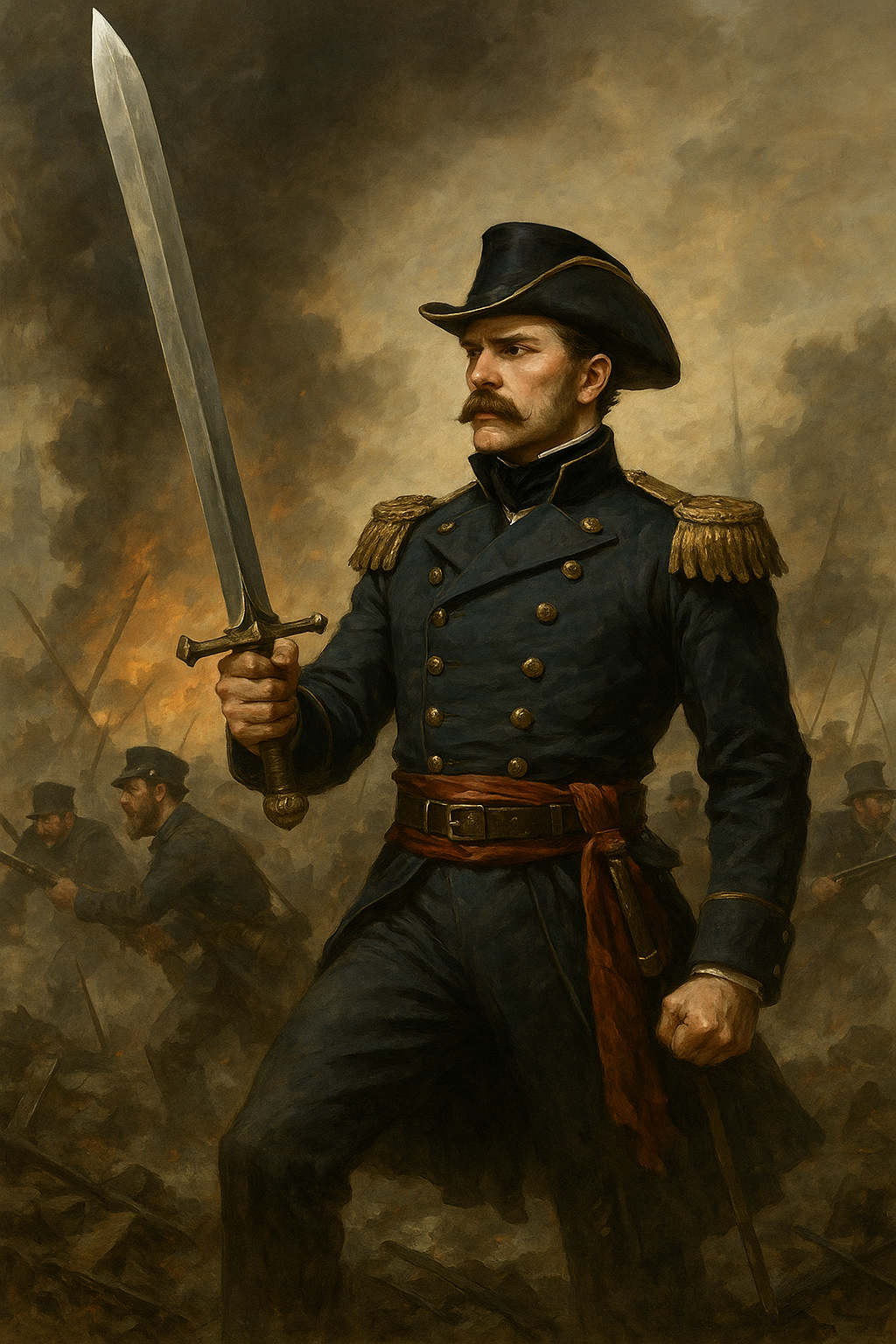
Commanders are fierce and courageous barbarians that support their team in battle through words of inspiration and command. They enhance and shape combat to fit their vision and make tactical and strategic decisions in real time.
Inspiring Command
Starting at 3rd level, you can inspire your allies through stirring words. To do so, you use a bonus action on your turn to choose one creature other than yourself within 60 feet of you who can hear you. That creature gains one Inspiring Command die, a d6. Once within the next minute, that ally can roll the die and add the number rolled to an attack or damage roll. In the case of an attack roll, this can be done after the d20 is rolled but before the DM says whether the attack hits or misses.
You can use this feature a number of times equal to your Charisma modifier, and you regain all expended uses when you finish a long rest. Starting at 6th level, you regain all expended uses when you finish a short or long rest.
Your Inspiring Command die changes when you reach certain levels in this class. The die becomes a d8 at 6th level, a d10 at 10th level, and a d12 at 14th level.
Headstrong Approach
Starting at 3rd level, you add your Charisma modifier to your initiative rolls.
Word of Command
Starting at 6th level, once per turn when you take the attack action, you can expend one Inspiring Command die and forgo one attack in order to command one ally that can hear you within 60 feet to make an attack against a creature you choose. That ally can use its reaction to make an attack against that creature, rolling the Inspiring Command die and adding the number rolled to their attack or damage roll.
Valiant Redirection
Starting at 10th level, when a creature targets one of your allies with a melee attack, you can expend one Inspiring Command die and use your reaction to redirect that attack to you, given that you are within reach of that creature. Roll the Inspiring Command die and subtract the number rolled from the attack roll.
Supreme Leader
Starting at 14th level, when you roll for initiative and have no uses of Inspiring Command left, you regain one use.
Fighter
The following are fighter subclasses.
Medic
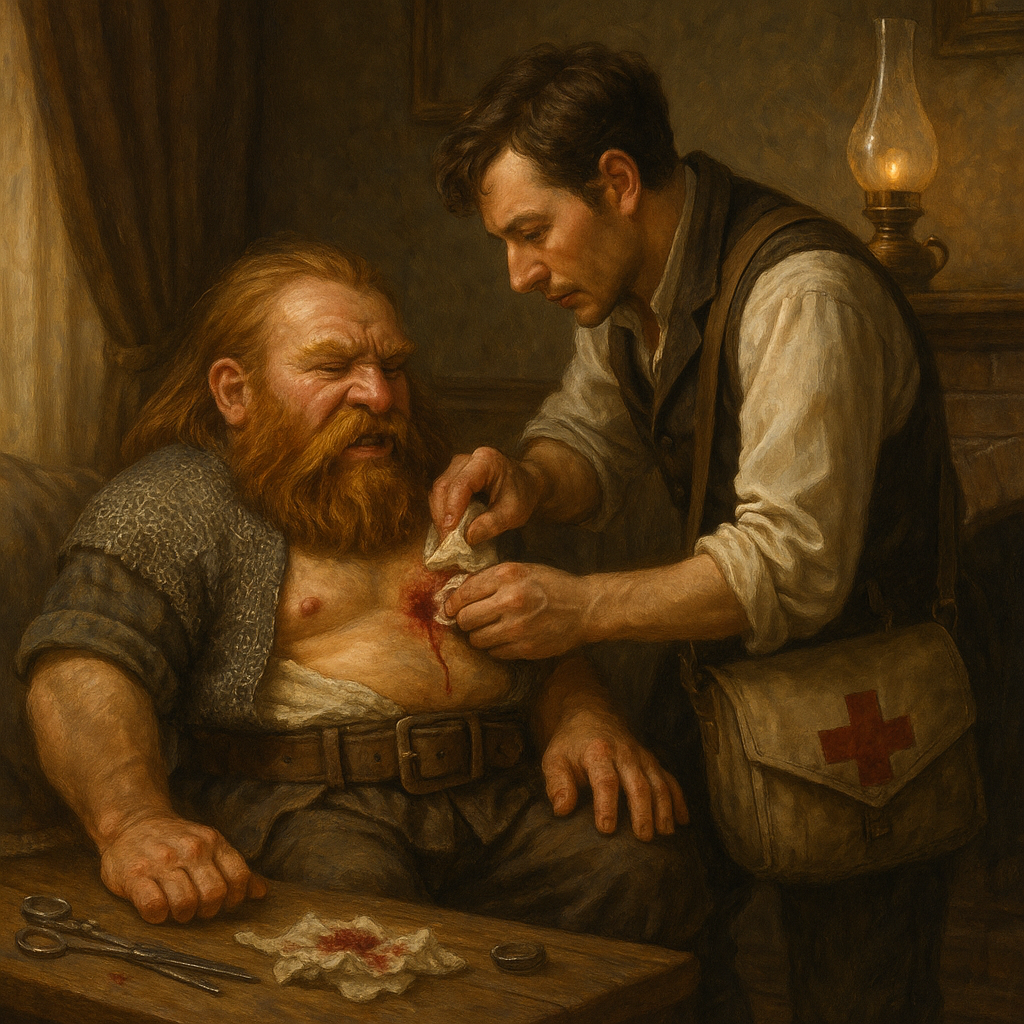
Medics are professional physicians that show there’s no need to rely on magic in order to heal the injured. These trained fighters know how to heal and even revive their comrades, proving to be an invaluable asset to their team. They are studied healers in the ways of medicine, and are essential in keeping soldiers alive and breathing.
Trained Physician
Beginning when you choose this archetype at 3rd level, you gain expertise with the Medicine skill, and you have advantage on Wisdom (Medicine) checks made to stabilize an Unconscious creature that has 0 hit points.
Tend Wounds
Starting at 3rd level, as an action you can tend to an injured creature you can see within 5 feet of you (or yourself), expending 1 use of a healer’s kit. The creature must be alive and stable. The creature gains hit points equal to 1d6 + your Wisdom modifier. You can use this feature a number of times equal to your Wisdom modifier and you regain all expended uses when you finish a long rest. When you reach 7th level, you regain all expended uses when you finish a short or long rest.
The number of dice increases by 1d6 when you reach certain levels. It becomes 2d6 when you reach 7th level, 3d6 when you reach 10th level, 4d6 when you reach 15th level, and 5d6 when you reach 18th level.
Patch Up
Starting at 7th level, you can tend to a creature with more extensive care. This process takes 10 minutes and requires you to expend 2 uses of a healer’s kit. You can do so over the span of a short rest, and the creatures must be alive, stable, and within 5 feet of you (or yourself). The creature regains hit points equal to 2d10 + your Fighter level + your Medicine modifier. Once a creature has been healed in this way, it must finish a long rest before it can be healed this way again.
The number of dice increases by 1d10 when you reach certain levels. It becomes 3d10 when you reach 10th level, 4d10 when you reach 15th level, and 5d10 when you reach 18th level.
Revive
Starting at 10th level, expending 10 uses of a healers kit, you can use your action to start reviving a creature that has died within the last minute. This process takes several minutes (until you succeed or fail), during which you need to make a Wisdom (Medicine) check with a DC of 20 minus the creature’s Constitution modifier at the end of every minute. You do not have advantage on these checks. If you succeed 3 times, the creature is stabilized with 0 hit points. If you fail 3 times, the creature remains dead and cannot be revived in this way. Successes and failures do not need to be consecutive.
Resource Management
Starting at 15th level, whenever you use a feature that requires you to expend more than 1 use of a healer’s kit, the total uses you need to expend is reduced by your Wisdom modifier to a minimum of 1.
Supreme Physician
Starting at 18th level, you can tend to a creature that has already been healed with the Patch up feature if you succeed a Wisdom (Medicine) check with a DC of 20 minus the creature’s Constitution modifier. On failure, you can’t attempt to tend to that creature again until it finishes a short or long rest.
Triggerman
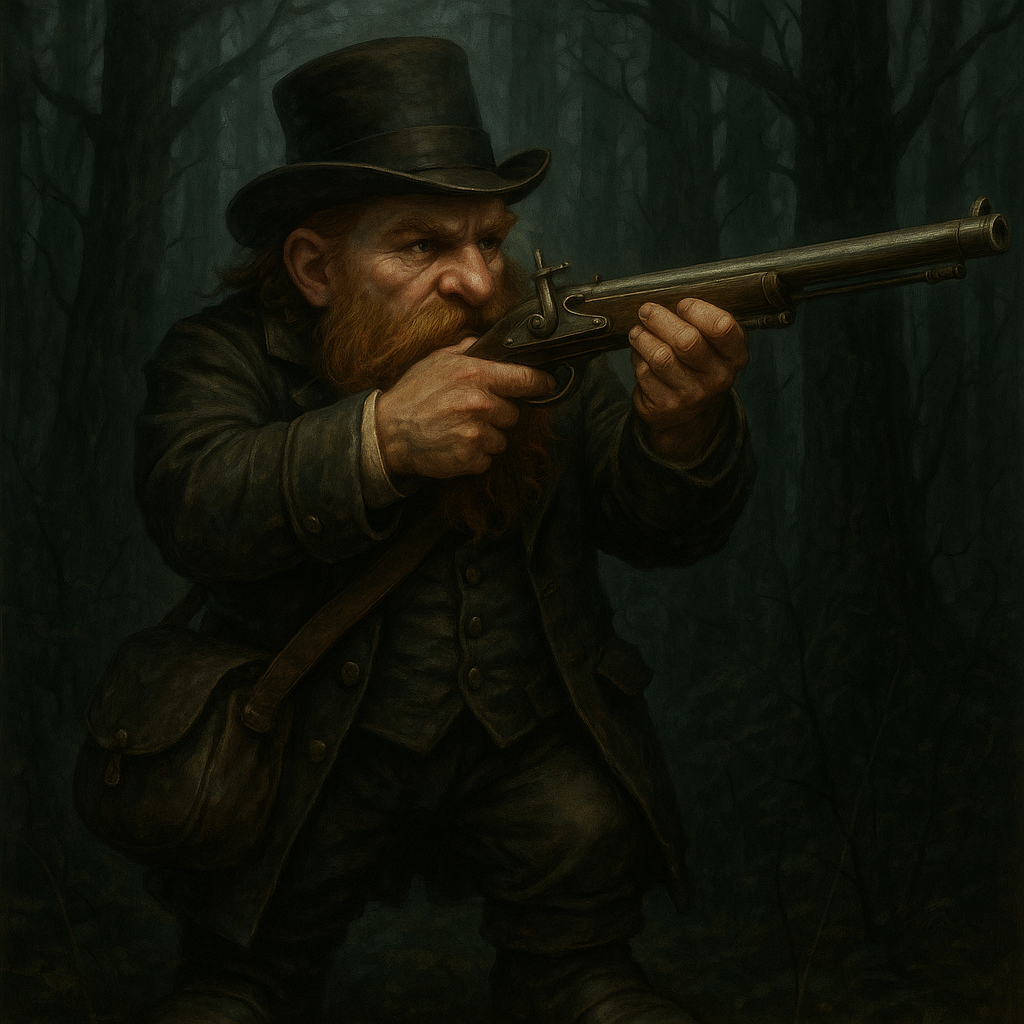
Deadly calm under pressure, Triggermen are specialists who treat the battlefield as a firing range. Their reflexes keep them one step ahead of danger, and their unmatched skill with firearms ensures that every shot counts. Quick to draw and quicker to fire, a Triggerman makes closing the distance a deadly mistake.
Firearm Specialist
Beginning at 3rd level, you have proficiency with firearms, you ignore the Loading property of firearms, and being within 5 feet of a hostile creature doesn’t impose disadvantage on ranged attack rolls with a firearm.
Ready for Action
Also starting at 3rd level, you have advantage on initiative rolls.
Aim Correction
Starting at 7th level, once per turn, when you miss an enemy with a ranged attack using a firearm, you can give yourself advantage on your next ranged attack roll against that creature until the end of your turn.
Quick Reflexes
Starting at 10th level, when a creature enters within 15 feet of you, you can use your reaction to make ranged attack with a firearm against it.
Deadly Precision
Starting at 15th level, when you have advantage on a ranged attack with a firearm, you can treat a roll of 18-20 as a critical hit.
Hip Fire
Starting at 18th level, once per turn when you make a ranged attack with a firearm, you can immediately make an extra ranged attack with the same weapon at disadvantage.
Rogue
The following are rogue subclasses.
Academic
The Academic is both an experienced rogue and an intellectual, blending wit and talent into a deadly combination. They learn and apply combative techniques, as well as various fields of study. They rely on their sharp cunning no less than their skills, and their brilliant maneuvers can turn the tide in battle.
Well Studied
Beginning at 3rd level when you choose this archetype, you learn two languages of your choice, and you have expertise in one of the following skills: Arcana, History, Nature, or Religion. You choose a second skill to gain expertise in when you reach 9th level.
Cunning Intellect
Starting at 3rd level, when you make an ability check, an attack roll, or a saving throw, you can choose to roll a Cunning Intellect die, a d6, and add the number rolled to the total of that roll. You can decide to use a Cunning Intellect die after you roll the d20, but before the DM says whether it’s a success or a failure.
You can use this feature a number of times equal to your Intelligence modifier, and you regain all expended uses when you finish a long rest. when you reach 9th level, you regain all expended uses when you finish a short or long rest.
Your Cunning Intellect die changes when you reach certain levels in this class. The die becomes a d8 at 9th level, a d10 at 13th level, and a d12 at 17th level.
Risk Estimation
Also starting at 3rd level, you can deduce when things are going to go sideways. You have a bonus to your initiative rolls equal to your Intelligence modifier.
Subtle Sabotage
Starting at 9th level, when a creature you can see within 30 feet of you makes an ability check, attack roll, or saving throw, you can use your reaction to roll a Cunning Intellect die and subtract the number rolled from that roll.
Utter Brilliance
Starting at 13th level, when the number rolled on a Cunning Intellect die is lower than your Intelligence modifier, you can use your Intelligence modifier instead.
Unrivaled Genius
Starting at 17th level, your Intelligence score increases by 2, and your maximum for this ability score is now 22.
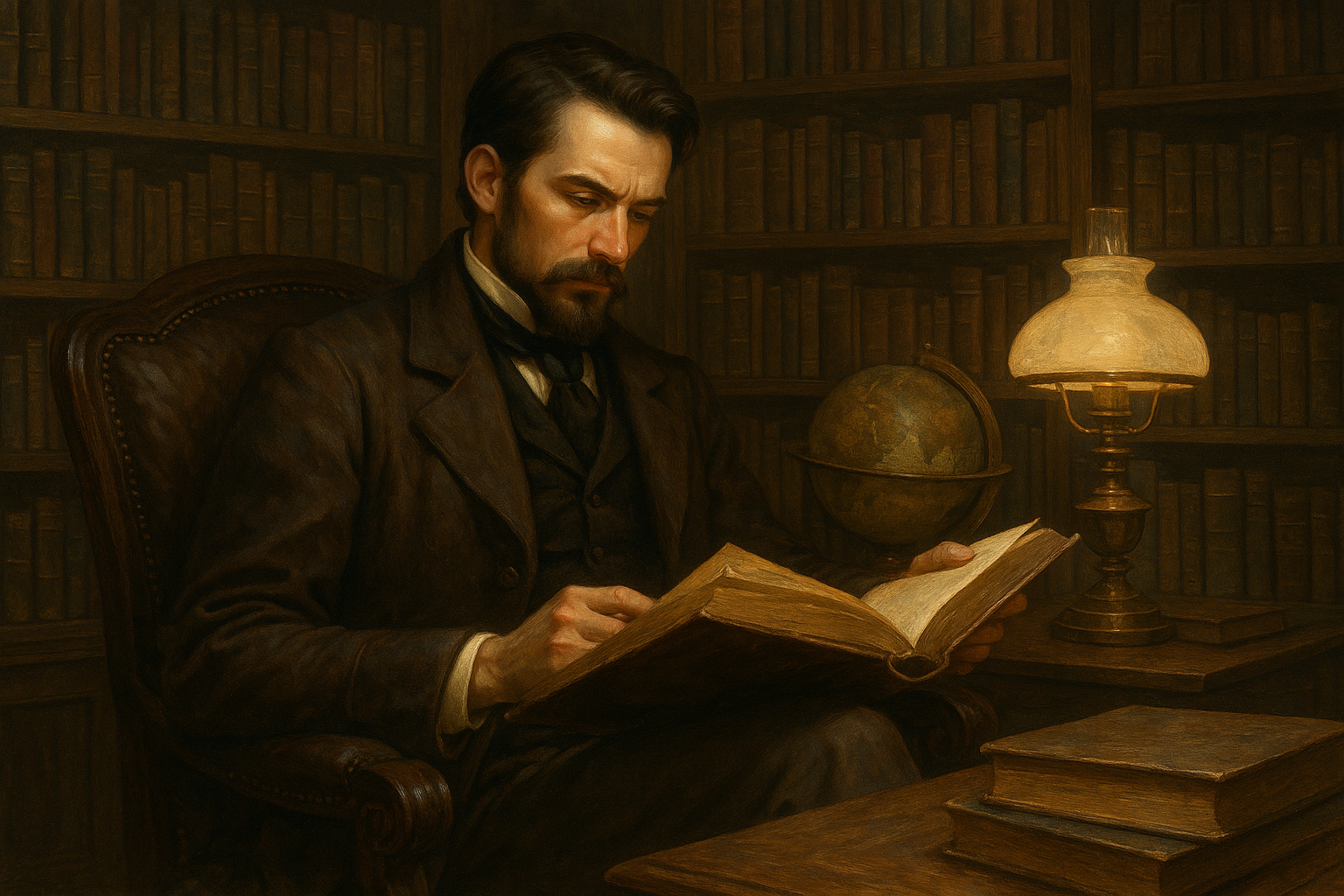
Hitman
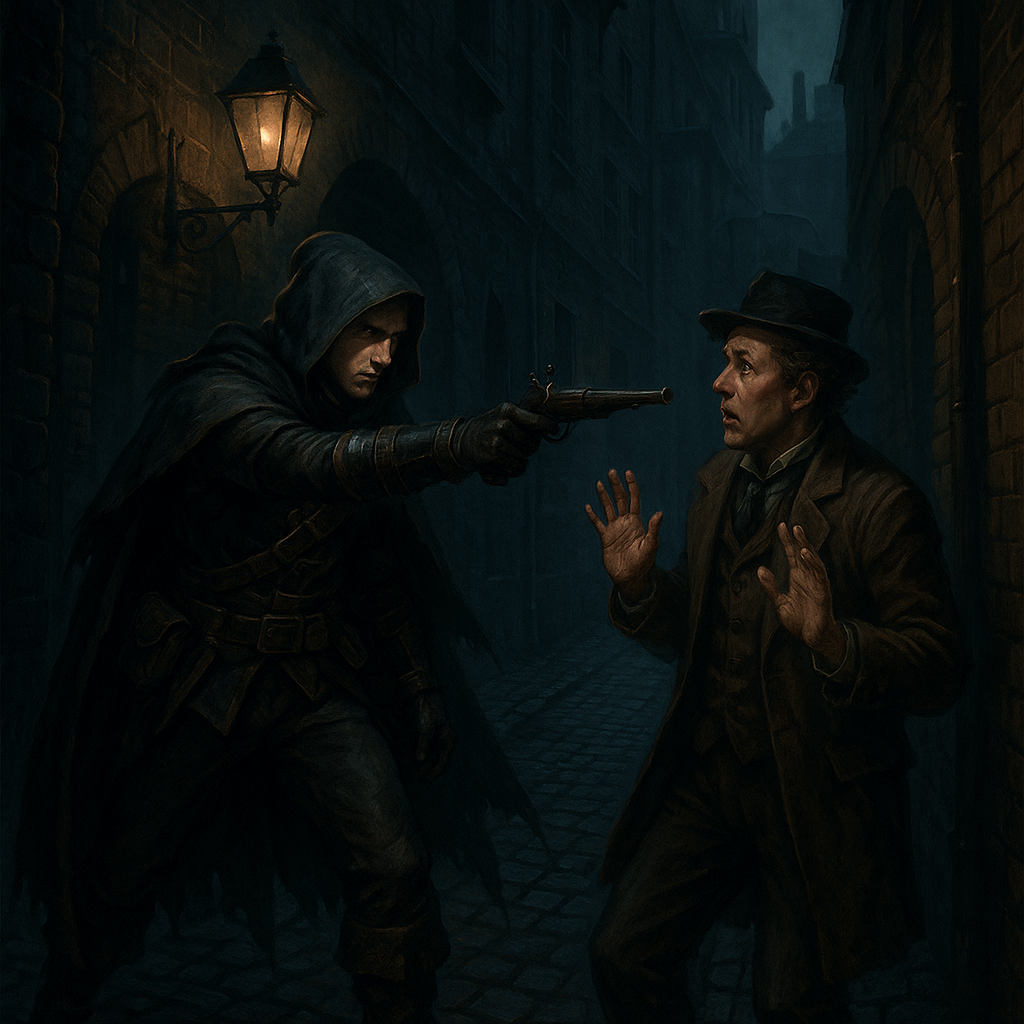
A Hitman strikes with lethal precision, blending rapid, methodical attacks with uncanny perception. Skilled with firearms and sharp instincts, they can follow up shots instantly, exploit openings, and turn careful observation into deadly advantage. At their peak, a Hitman can deliver multiple precision strikes in a single turn, making every shot count.
Firearm Expert
Beginning at 3rd level, you have proficiency with firearms, you ignore the Loading property of firearms, and being within 5 feet of a hostile creature doesn’t impose disadvantage on ranged attack rolls with a firearm. Additionally, you treat firearms as finesse weapons when making a melee attack with a firearm as an improvised weapon, and you can add your proficiency bonus to the attack roll.
Rapid Shot
Starting at 3rd level, when you make a ranged attack with a firearm, you can use your bonus action to make another ranged attack with the same weapon. You don’t add your ability modifier to the damage of the bonus attack, unless that modifier is negative.
Sharp Instincts
Starting at 9th level, once per turn when you make a ranged attack, you can make a Wisdom (Perception) check against the target’s AC. If you succeed, you have advantage on the attack.
You can use this feature a number of times equal to your Wisdom modifier, and you regain all expended uses when you finish a short or long rest. The use is not expended when you fail the Wisdom (Perception) check.
Astute Aim
Starting at 13th level, once per turn when you make a ranged attack, you can add your Perception modifier to the attack roll. You can use this feature after you roll for the attack but before the DM declares whether it hits or misses.
You can use this feature a number of times equal to your Wisdom modifier, and you regain all expended uses when you finish a short or long rest.
Deadly Shot
Starting at 17th level, when you make a ranged attack with your Rapid Shot feature, it’s eligible to deal Sneak Attack damage even if your had already dealt Sneak Attack damage this turn. Sneak Attack requirements still apply.
Chapter 5: Feats
The people of Morgenfell have adapted to a different way of living than the rest of Nornfeld, what with their technology and lack of magic. To reflect that there are feats that compliment the setting.
First Aid Provider
Origin Feat
You have learned methods to provide first aid to humanoids in a critical state. You gain the following benefits.
Reliable Technique. When making a Wisdom (Medicine) check to stabilize a humanoid with 0 hit points, you can treat a roll of 4 or lower on the d20 as a 5 (unless it’s a 1).
Practiced Medic. When you successfully stabilize a creature with 0 hit points, it regains 1 hit point.
Chapter 6: Items
The following are items that are essential to running a campaign in the setting of Morgenfell.
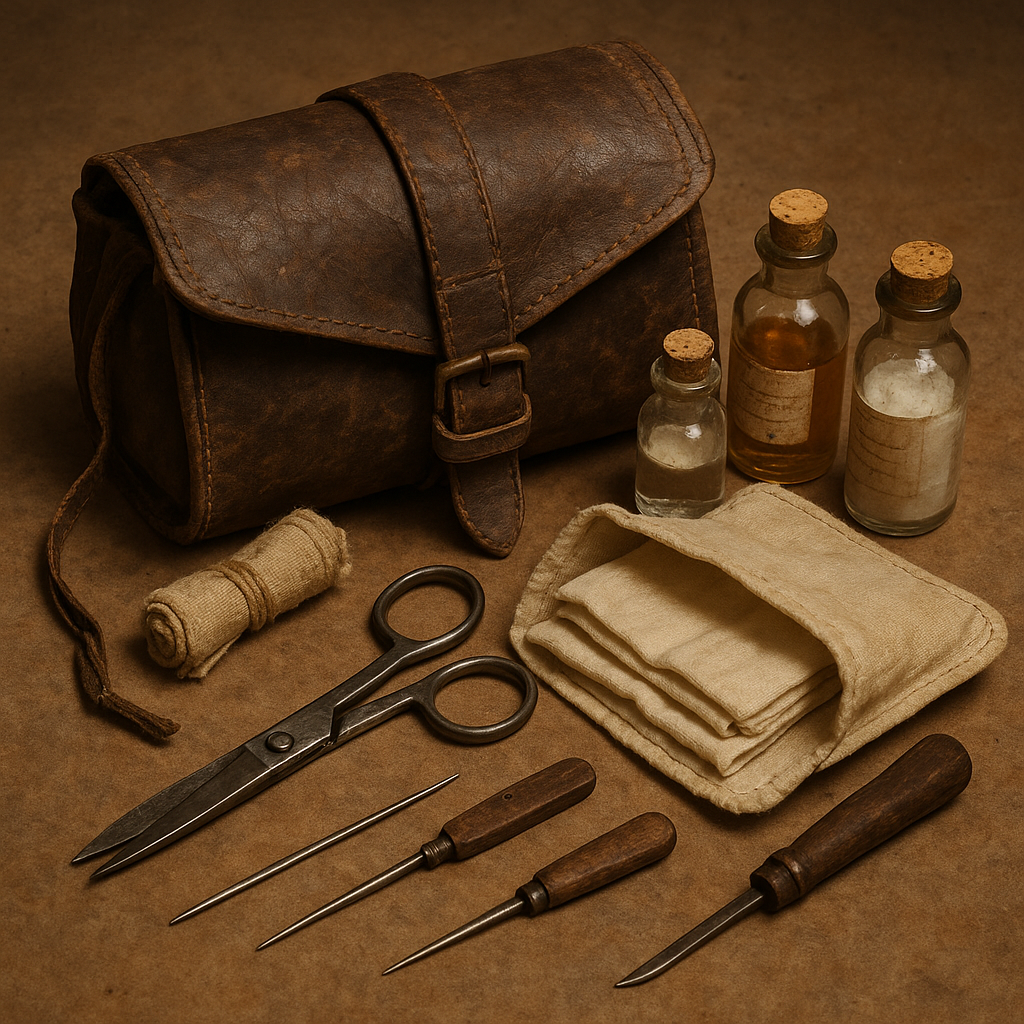
Modern Healer's Kit
This modern kit is a leather pouch containing bandages, salves, splints, and rubbing alcohol. The kit has 20 uses. As an action, you can expend one use of the kit to stabilize a creature that has 0 hit points, without needing to make a Wisdom (Medicine) check.